The moment my cousin said, “Let’s trek to Everest Base Camp this Dashain,” the atmosphere in the room appeared to change. I never imagined that a Dashain vacation plan could seem like standing at the edge of something irreversible. Dashain is Nepal’s largest and most beloved festival. We celebrate this festival with festive meals, tika blessings, and family get-togethers, but this time it seemed equally weighty, exciting, and lethal. My mother questioned me at the dining table, “Fourteen days of walking? In the mountains?” After remaining silent for a while, my father said, “Mountains don’t care how confident you feel.” I pretended to be courageous as I nodded, but on the inside I was already picturing thin air, never-ending climbs, and blisters developing on my feet.
The next few days went entirely into preparation. Together, the seven of us, my cousin and a close group of friends, went shopping and tried on gloves, boots, and jackets that felt big and stiff. I said, “These shoes better not betray me halfway.” My friend laughed and replied, “Everest doesn’t forgive weak shoes.” At home we threw out a map of the Everest region on the ground and marked our itinerary with each word feeling more like a warning than a promise: Lukla, Namche, Tengboche, Base Camp. Despite my complaints, my mother put extra snacks in my bag that evening. She advised carrying a bag with minimal weight. “You’ll require strength.” I nodded at her, not realizing at the time how emotionally and physically hard the weight would be.
It was a sleepless bus ride overnight. The road was covered in darkness, and we kept waking up from rapid turns. We got to Lukla in the morning. It felt wrong to refer to it as an airport given that it was a little space set between mountains and filled with trekkers carrying baggage and anxiety. When I spotted the plane, I froze. “That’s… really small,” I said. My knees were touching the seat in front of me. The mountains appeared to rush at us as the engine roared. “I don’t like this,” I whispered. My friend answered, “Just breathe.” The landing was terrifying; the runway tilted and ended at a cliff. When the plane landed, everyone smiled in relief, and I realized there was no turning back.
With the steady rush of the Dudh Koshi River next to us and chilly air filling my lungs, the route started quietly. Suspension bridges shook under our feet, prayer flags snapping loudly in the wind. I froze halfway across one. “Why does it move so much?” I yelled. “Because you’re still alive,” my friend replied. Water thundered beneath us, dogs barked, and when I crossed over, my hands shivered from pride as much as terror. I continued even though my bag felt heavy and my lungs burnt as I was distracted by waterfalls falling over cliffs and monasteries mysteriously appearing along the trail.
By the time we arrived in Namche Bazaar, the altitude had taken a hit, causing my head to pound and my breathing to come in short gasps. I collapsed onto a bench and said, “Something feels wrong.” My friend laughed and said, “Welcome to Namche.” In strong contrast to the mountains around it, the environment was alive with bakeries, cafés, and tourists. When we talked to locals, reality hit. Schools were hours away, hospitals farther, police stations difficult to find. Kids had to walk for three to four hours to get to school. I questioned a man, “What happens if someone becomes ill.” He responded simply, “They walk.” Every bite of food and every cup of tea took labor and a distance which I didn’t anticipate. In comparison to the burden of life there, my own overweight backpack challenge seemed tiny.
Higher up the trail grew steeper. My shoulders burned, my knees hurt, and every step demanded effort. Then we were passed by Sherpas who were carrying over 100 kgs with steady steps while wearing slippers. I stopped and stared. I whispered, “I can hardly carry my bag.” I requested hot water at a teahouse. “NPR 1000,” the owner said. When my friend complained about the price, he replied, “Gas, food, everything; someone carries it up.” At that moment, I understood that nothing in this place came easily. Strength and stamina were used to calculate the cost of even minor conveniences. I offered a local kid a protein bar. With every bite, his eyes grew wider. My cousin whispered, “He’s never tasted this before.” Humbled and conscious of my privilege in ways I had never thought about it, I felt a tightness in my throat.
The hardest times were at night. There was no electricity, just solar lighting and stars that appeared to be touchable. Cold soaked through every layer of clothing. My body was screaming from the day’s hike while I lay awake listening to prayer flags crashing in the wind. I reflected on how different my life was at home. Anytime I wished, I could place an order for food from a restaurant. I could travel anyplace if I got into a car. I could shop without effort, without forethought, and without scarcity. Every basic need in such a place required patience, walking, carrying, and waiting. The previous several days put me to the test. Breath came in short gasps; blisters burned. After a particularly difficult elevation, I said, “I don’t think I can do this anymore.” “You don’t have to be strong,” my cousin replied while smiling at me. “Just don’t stop.” So, I didn’t.
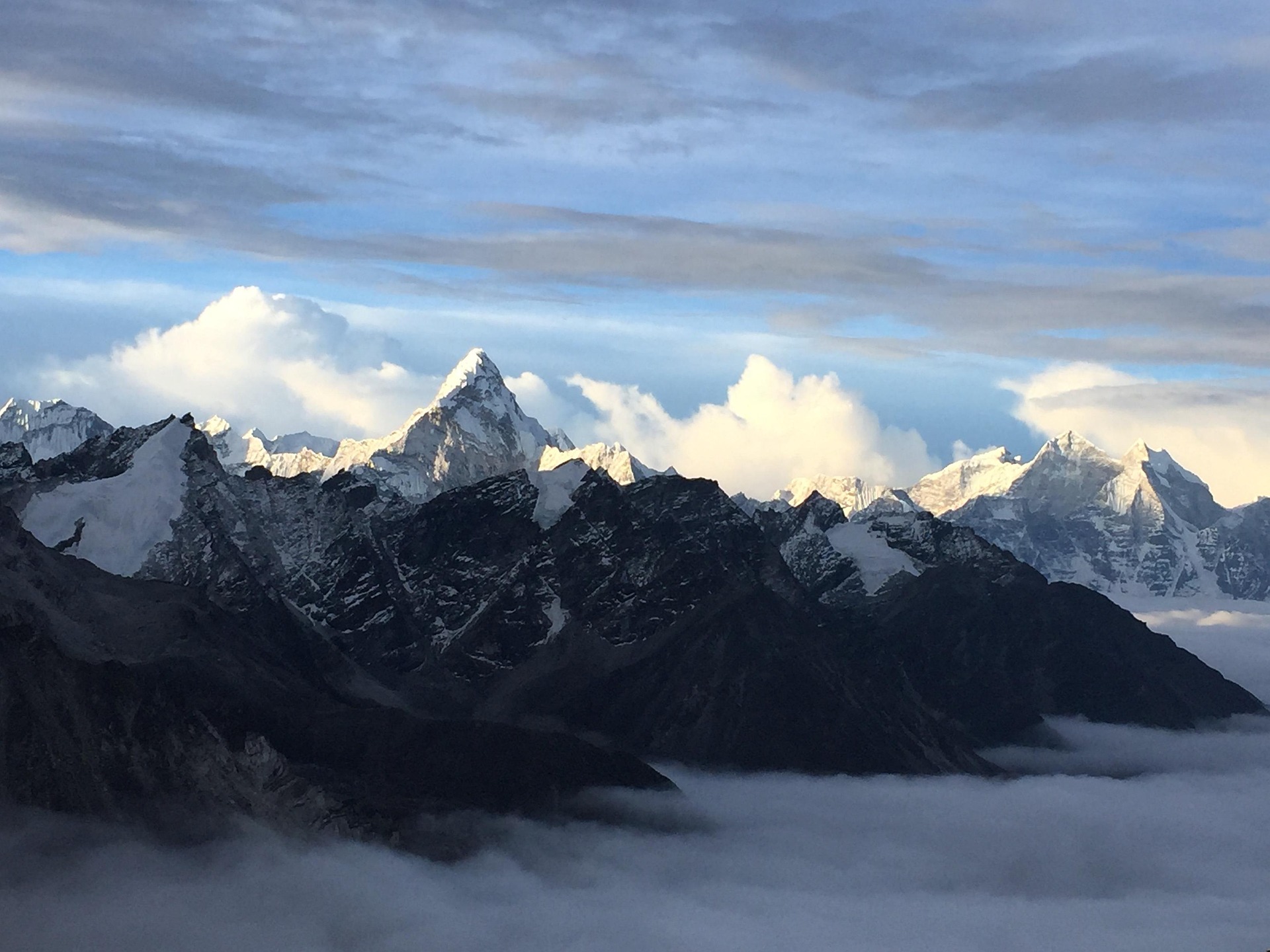
During our route, we reached our hands to turn each prayer wheel individually, clockwise, sending a silent prayer into the wind with each turn. This traditional Buddhist practice, which is widely followed in Nepal especially in Himalayan region, gave the journey additional quiet meaningful moments. By the time the last wheel was behind us, we had also reached our destination, Everest Base Camp. The mountains stood still, those huge, jagged peaks extending forever as the wind yelled. I froze, as prayer flags snapped furiously. I lifted my camera, trying to capture that moment and then lowered it again after realizing that the overwhelming dimensions of the ice, and the silence, could never be captured by the lens. My hurtful knees, feet, lungs, and doubts all went away at once. Tears flowed down my cheeks, hot against the freezing wind, not from the cold but from something deeper. As I stood there, I thought about locals who wake up every day without easy access to food, hospitals, or roads. I felt painfully aware of how privileged I had been and how frequently I had taken comfort for granted. I felt humility flooding my heart. Not only did the mountains put me to the test but they also showed me what it meant to fight back, to be grateful, and to humbly express wonder. As I stood there, breathless and alive, a lyric ran through my mind, and I whispered to myself, “Mount Everest ain’t got shit on me cause I’m on top of the world.” However, the journey, the people, the challenge, and the realization that life can be cruel, beautiful, and humbling all at once were more important than Everest. I would always remember what it meant to actually endure.
With the peaks disappearing behind me, I stood as I turned back to the trail we had taken and experienced a quiet sense of respect in my chest. The mountains didn’t say anything; they just existed. However, in their silence I realized something I hadn’t previously realized: life, like this trek, is both immense and fragile, and moments like this were intended to be cherished long after the wind passed.