











WESTFIELD – The space is beaming with so much laughter, you’d think that we are actually in an elementary school cafeteria at lunch time. Artifacts from other clubs are strewn across the counters that line the north and south sides of the room.
I clear my throat. “Okay. What are the challenges you observe in the community of chess? Broadly.”
“Damn good question,” says Jared Shapiro, a recent recruit of Westfield State University’s Chess Club. He’s a curly-haired environmental science major who is psyched to study vampire bats this summer in Costa Rica. He elected to do his interview publicly, in view of the rest of the club members as they played their casual chess matches.
“I feel like it’s very stagnant, like, stagnant isn’t the right term, like… boring. It’s just waiting,” continues Jared before he is endearingly heckled by his fellow club members. “Okay, hold on, let me talk. Like, when I’m in here, I have a grand old time just talking to everybody, but in professional tournaments, just everything’s dead quiet. Yeah, you kind of want to blow your brains out at the end of it.”
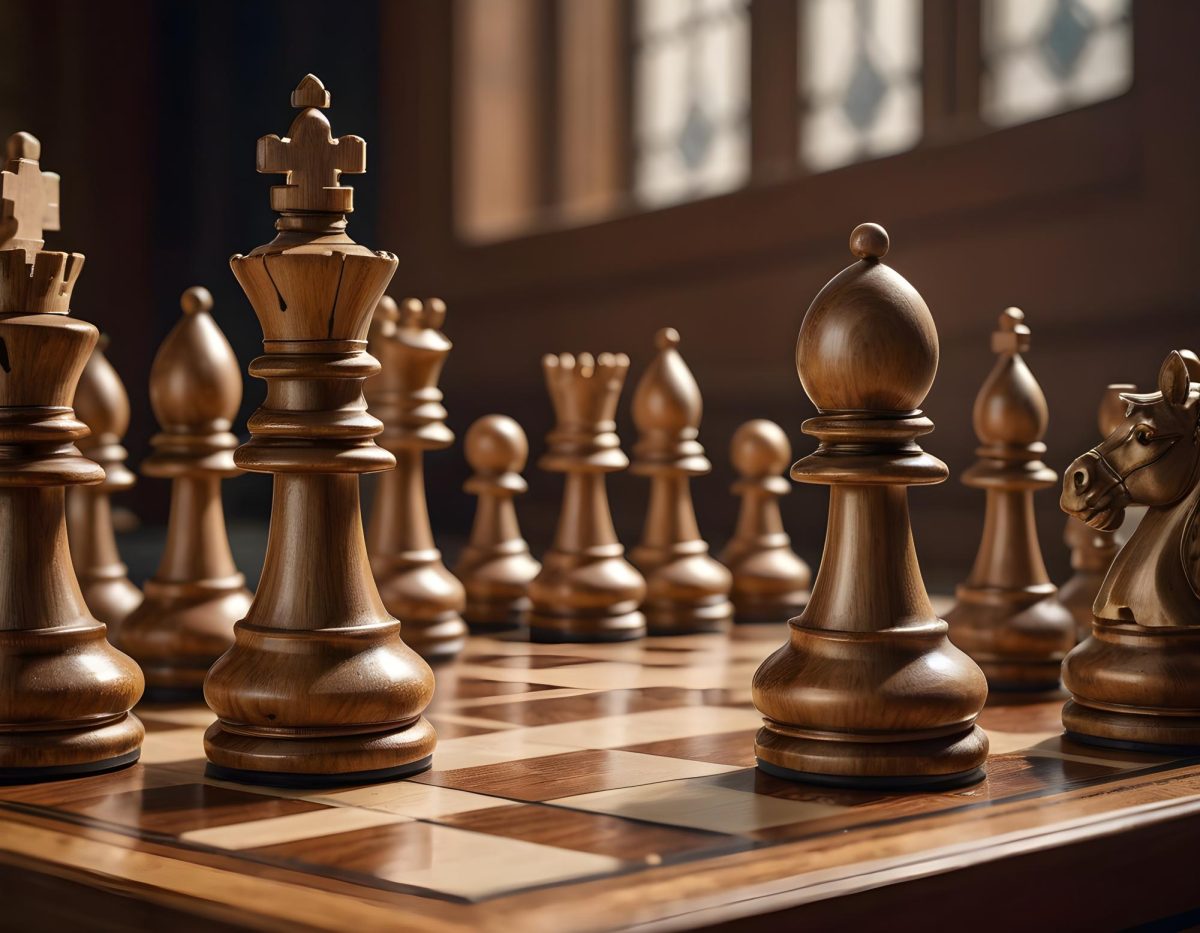
But it’s everything except dead quiet in the Ely Club Room every Monday evening. Here, a group of less than 10 meets to play back-to-back games of chess, do homework, or rant about the woes of college life. During my second time visiting the club, four games were being played next to each other. One game between members Maddy Kauffman and Ibrahim Al Naqeeb was being regarded as “David versus Goliath” due to the amount of time both players have committed to the recreation.
The club was started back in 2023 by alum Spencer Edwards, but it really took off in 2024. The club currently faces a rebuilding year after a majority of the club graduated last year. Now, the club is headed by senior health sciences major Emily Curtis and junior criminal justice major Bailey Metcalf.
So, the question remains, why isn’t the room dead quiet if there is chess being played?
In a study room adjacent to the Ely Club Room, I had an interview with Emily Curtis about her experience with chess.
“What intrigued you to join the chess club?” I say to start the conversation.
“So, I actually, I have a bit of a history with chess. I started playing when I was like 15 and then I was president of my high school chess club. So, and that’s kind of what sparked my interest as I joined it way back then, then became president of my high school chess club. I’m a transfer student, actually. So I was president of our community college chess club,” she says humbly, her blue eyes staring right back at me as she uses her hands to emphasize her points.
“Wow. Quite the resumé.”
“Yeah, long history with chess.”
From the study room, I can still hear echoes of laughter emanating from the other club members. There is chess being played, yet it sounds like we are standing outside a stand-up comedy set.
The club is diverse and there isn’t contention about who is considered “worthy” of playing the esteemed and intellectually rigorous game of chess. So who is chess for, currently?
“There’s a lot of assumptions that I’m not going to be a good player because I’m AFAB [assigned female at birth]. Um, I, there’s a lot of, I think, unintentional misogyny. I don’t see people trying to be misogynistic, but there is an assumption that, like, when I walk up to that board, I’m just playing for fun. And, like, no, I’m a mad shit talker. Like, it’s not that like, I don’t play to win and stuff. I think chess should be fun, I think it should always be fun. But there is always the assumption that, like, I’m not going to be good. And that’s not the case,” said Bailey Metcalf, vice president of the club. They like to play their chess games with their feet on the seat of their chair rather than on the ground.
This sentiment was shared by Emily, and by many other female-identifying players of other strategy based recreations. An article from the U.S. Chess Federation states, “As of 2025, 237 unique men and just 18 unique women have been on teams’ rosters for the President’s Cup (with some competing more than once).” The President’s Cup is the top collegiate tournament for chess, and these numbers are jarring. So, is it true that the chess community is boring, and perhaps even stagnant, like Jared Shapiro said?
Aside from the gender gap, Bailey Metcalf believes there is an air of pretentiousness held about the way the game should be played.
“Me and my uncle would have our board out, kids would come over. You wanna learn to play? Stuff like that. Like, they’re just watching the game. And like people are weird about that. People are like, ‘Well, you’re teaching them the wrong way,’ or they’re watching the wrong type of game because we don’t play by the book or like, you know, stuff like that. So, I don’t know. There’s a lot of um, rudeness. Like, if you’re good at the game, you’re allowed to be rude, and I don’t think that should be allowed, in anything,” said Bailey.
You don’t need to know chess to join the club, only a willingness to learn is required. Every committed member learned to play in their own way.
The WSU Chess Club believes there really isn’t a “right” way to learn, but the best way is simply to start playing.
Bailey first learned from their uncle during the COVID lockdown, “I got really into it. I like pattern recognition games and stuff like that. And yeah, and then eventually when COVID was over, I was like, you know, I was kind of like, how do I learn to play chess? He worked at Amtrak. He was like, if you buy a hot meal, homeless men will play you and they play really well. And I was like, that’s really cool. And I started doing that.”
Now, the room is dead quiet, but not in a pretentious way. It’s 5:19 pm.
The only people left in the Ely Club Room are Lia Steskla, Maddy Kauffman, Emily, and me.
Maddy and Emily are in an intense chess stand off. The game is slow, one chess piece being moved one space at a time until Emily finally takes one of her rooks and makes a big leap into Maddy’s side of the board. Not a word is spoken between the two of them. They only speak through the calculated moves of the chess pieces, and you aren’t left wondering if each player is secretly spewing vile insults to each other in their heads. It’s civil here. It seems that the WSU Chess Club aspires to be what the professional chess scene isn’t: a place for everyone.
Maddy plays more defensively while Emily seems to control the board. Emily is leaned in, also showing physical dominance over the board while Maddy sits back, her hands in her lap as her mind ticks like a clock making protective moves. Maddy and Emily are mirrors of each other— both have light brown hair, large rectangular glasses, and a talent for chess. Emily has her hair tied up in a black scrunchie while Maddy’s is in a short bob. There is no indication of frustration or stress from either of them. Like seasoned pros, they don’t let their egos show through.
Emily holds her finger down on the top of each piece after she places it. Letting go would signify the end of her move– and a wrong one could be costly. After a while, Emily finally takes a piece, a rook. Maddy takes one in return.
“Touché Maddy,” Emily says. Maddy wins after she forces Emily’s hand, and there’s nothing but smiles.